scar camouflage tattooing
Looking for the Scar Camouflage pre-care instructions?
Photo Gallery


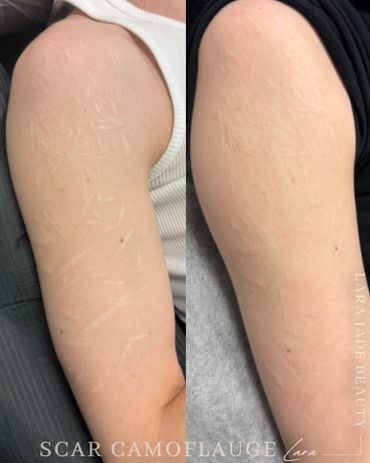
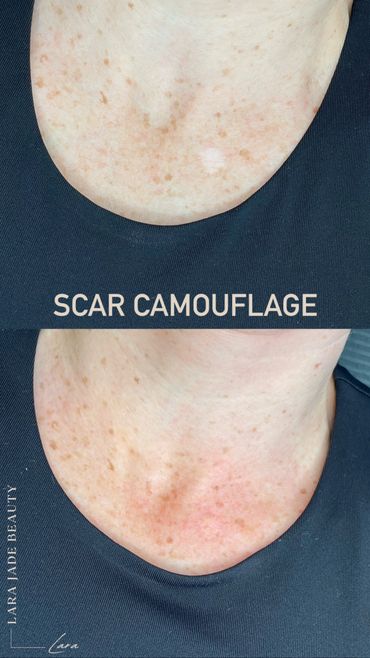
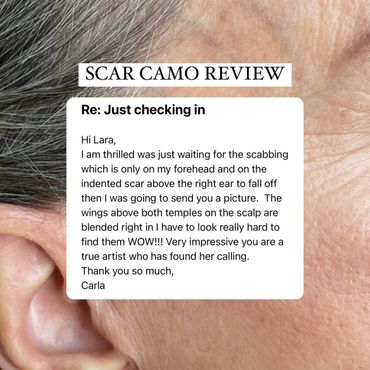
What is Scar Camouflage?
Scar camouflage tattooing is a specialized form of medical tattooing (micropigmentation) used to match hypopigmented (white) scars to the surrounding skin. Hypopigmented scars are areas that have lost their natural pigment and appear lighter than the rest of the skin due to reduced melanin production. I work exclusively on this type of scar.
This treatment is designed to minimize the contrast between the scar and the surrounding skin, helping it blend more naturally. The goal is to make the scar up to 80% less visible once healing and colour settling are complete.
Scar camouflage typically requires multiple sessions, as we work in light, translucent layers and gradually build colour over time — similar to a watercolor painting. This layered approach ensures a softer, more natural blend and allows the pigment to heal evenly within the scar tissue.
Scar camouflage can help with:
- Surgical scars (that are hypopigmented i.e. lighter than the surrounding skin)
- Self harm scars
- Trauma and injury scars
- Burn scars
- Cosmetic surgery scars such as tummy tucks and facelifts
- Lightened birthmarks or non-pigmented age spots
Scar camouflage does not remove scars, but it can dramatically improve their appearance by restoring flesh-toned colour and improving overall blend with the surrounding skin.
Results are long-lasting, low-maintenance, and fully customized to your skin tone, scar type, and healing response.
Frequently Asked Questions
Please email info@larajadebeauty.com if you cannot find an answer to your question.
Scar camouflage only works for scars that are lighter than the surrounding skin but ISR could help for hyperpigmented (dark) scars
This procedure generally requires multiple sessions for optimal results.
For scar camouflage, the pigment is layered on translucently and slowly builds in color for the best match to the surrounding skin. Each session is charged individually (i.e. no touch ups included) because every person and every area requires a different number of sessions.
How many sessions required depened on a number of factors, such as how thick the scar is, how your body heals, lifestyle, etc. On average, it will take 2-3 sessions.
Forever once healed!
Remember that scar camouflage this is essentially a tattoo and therefore sun will continue to fade it, so keep the area protected with SPF.
There is no down time with this procedure and you should be able to resume your normal activities. However, there are a few restrictions: Avoiding intentional sweating for a week, and no soaking/submerging the area in any bathtubs, swimming pools or jacuzzi’s for a least 14 days after.
Aftercare varies depending on the location of the scar. In general, keep the area clean and hydrated. You will receive after care information and given aftercare ointment. Avoid submerging in water and intentional sweating for 10-14 days after the appointment.
For scar camouflage, Lara custom-blends pigments for each client using advanced color theory, an in-depth assessment of your natural skin tone, and undertone analysis. Multiple test swatches are applied directly on your skin before treatment to ensure the most accurate match possible.
Because scar tissue heals and reflects pigment differently than normal skin, adjustments are made in real time during the procedure to achieve the most natural result. Immediately after treatment, the area will appear darker and redder—this is completely normal, especially with incision scars—and will soften significantly as healing progresses.
Final color is evaluated at your follow-up once the skin has fully settled.
For scar camouflage, usually there is minimal to no pain when working in a scar due to the thickness of the tissue and lack of nerve endings. It may begin to feel sensitive if it’s a large area.
Make sure you have read the pre and post care entirely.
The day of the procedure you will want to shower and make sure the area is clean. Wear loose fitting clothes where you will be tattooed.
Pre care: Scar CAMOUFLAGE
One Week Prior:
- If you are taking any medications that may affect healing or bleeding, and have been
prescribed by a physician, please review these with your physician before discontinuing one week prior.
One Day Prior:
- Do not drink alcohol 24 hours prior to the procedure.
Day of Procedure:
- Shower and wash the area. Do not use any creams on the scar area.
- Do not work out, consume coffee, or consume any blood thinners (listed above).
- Wear loose clothing over the area that will be tattooed.
- You may want to bring a zip up sweater that you can wear open so you aren’t cold.

PRE-SALE
- AREOLA TATTOOING ONLINE TRAINING -
Access to one Complete Bilateral 3D Areola Demonstration
for ONLY $89 (instead of $189).
Best suited for tattoo or PMU artists with at least 2 years of tattoo machine experience.
Cookie Policy
This website uses cookies. By continuing to use this site, you accept our use of cookies.